For technological futures that respect cultural values and improve quality of life
We are preparing the first residency programme, developing host partnerships and seeking the funding and strategic support needed to launch and sustain it.
Artistic inquiry can change what technology becomes
Together with participants, we test and refine collaborative methods and identify opportunities for innovation, societal value and competitive advantage. We support learning among residents and host teams, helping organisations develop the skills, working practices and culture needed for lasting collaboration across disciplines.
Learning from residencies will help other teams strengthen collaboration and innovation, inform company practices and institutional change, and contribute to public policy that supports the wider innovation ecosystem.
New questions, experimental methods and prototypes that teams can test and develop further.
Paid opportunities for artists and research teams to learn together, strengthen their practice and develop work that benefits people and society.
Knowledge and methods that support education, innovation and evidence-informed policy, while helping artists and researchers build skills and expand their professional opportunities.
How a residency works
Throughout the residency, TAH will provide facilitation, tailored advice and training, with regular reflection on progress and emerging results. Evaluation will inform next steps, followed by support for transferring knowledge and outcomes into further research or practical use, and sharing the work with relevant professional and public audiences.
01
Open call
02
Selection
03
Onboarding
04
Facilitated collaboration
05
Evaluation
06
Transfer and communication
Ongoing reflection and learning
The foundations and people behind TAH Laboratory
TAH Laboratory builds on TAH Centre’s experience, including methods developed through TransInnovate and applied in workshops in Linz and Hainburg; TAH Prism, our developing AI-supported tool for examining ideas, questioning assumptions and exploring different knowledge perspectives; a study co-authored with Technology Centre Prague for TA ČR on supporting interdisciplinary and transdisciplinary research; and tailored education programmes. These experiences inform how we prepare teams, facilitate collaboration and evaluate and share learning from residencies.
Initial host partnerships
We are preparing art–science residency partnerships with the Czech Institute of Informatics, Robotics and Cybernetics (CIIRC) at the Czech Technical University in Prague and the University of West Bohemia. We welcome technology-focused departments and laboratories at universities and industry partners, as well as anyone interested in art–science collaboration.
Advisory board
Our advisory board supports TAH Laboratory’s development through strategic advice, international connections and the exchange of knowledge and experience. Meet its members below.
Art–science collaboration in practice
These international projects illustrate different forms of art–science collaboration and the outcomes they can produce. Developed by other organisations, they provide inspiration and context for TAH Laboratory’s ambitions.
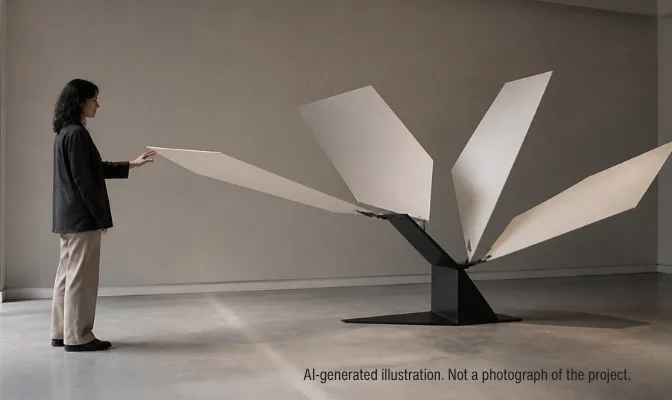
Artistic requirements shape expressive robotic movement
Aparna Rao and Søren Pors · Wyss Zurich · Residency phase 2017–2019
Aparna Rao and Søren Pors worked with robotics engineers to make sculptures move with hesitation, shyness and fatigue. Their artistic requirements shaped motor modules and software for controlling subtle movement without specialist programming. Tested in moving artworks, these tools opened robotic animation to creators who could develop a personal language of motion.
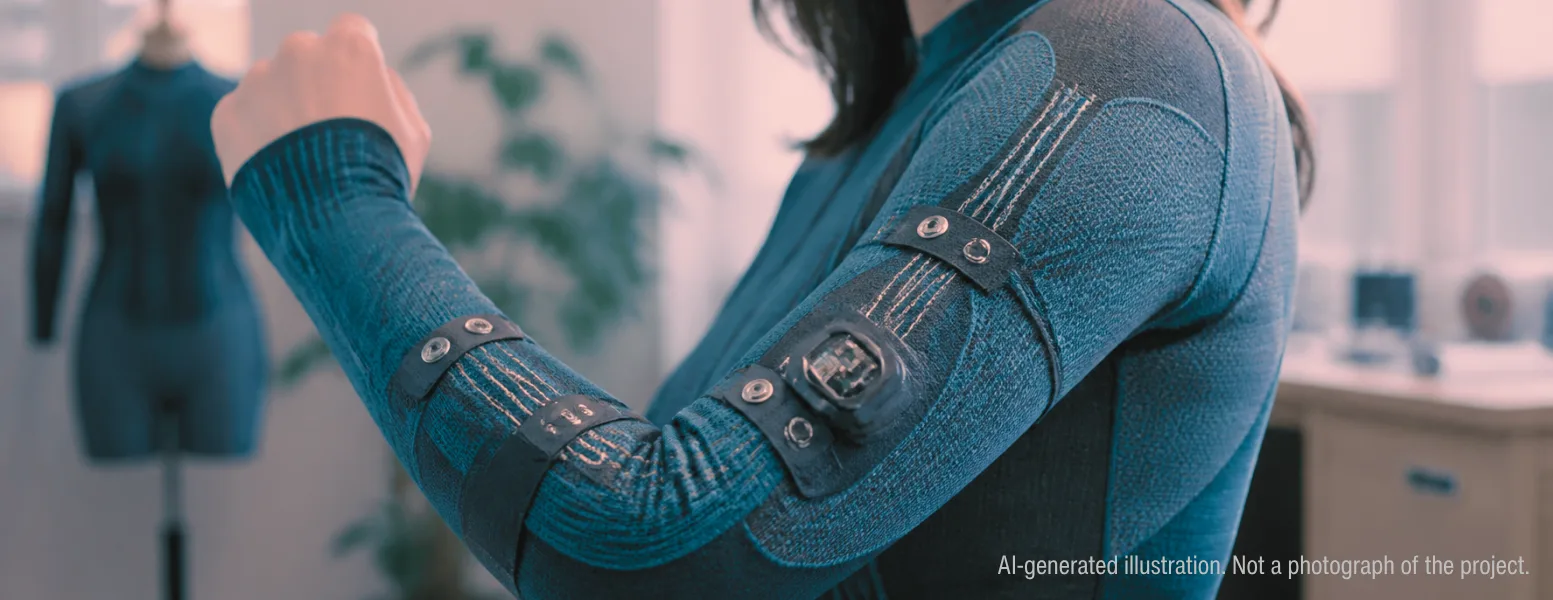
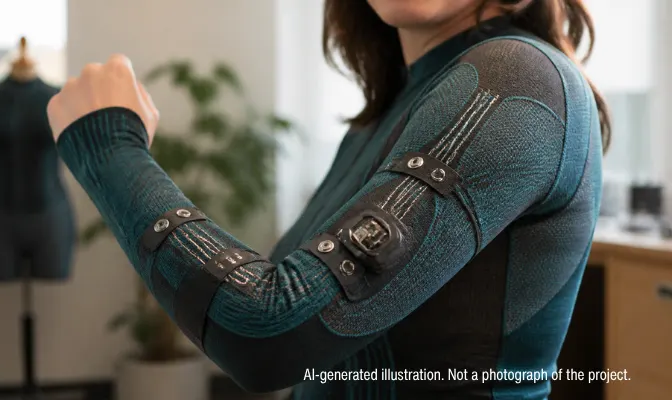
Sensor textiles connect creative activity with stroke rehabilitation
Jessica Smarsch · Fraunhofer IZM · Re-FREAM collaboration 2019–2020
Jessica Smarsch worked with Fraunhofer IZM and textile and electronics partners on sensor clothing for rehabilitation after stroke. Textile electrodes measure muscle activity, while an app turns body data into creative visual patterns. The collaboration produced garment designs and a working armband prototype, bringing textile design, sensing and creative feedback together to support rehabilitation exercises.
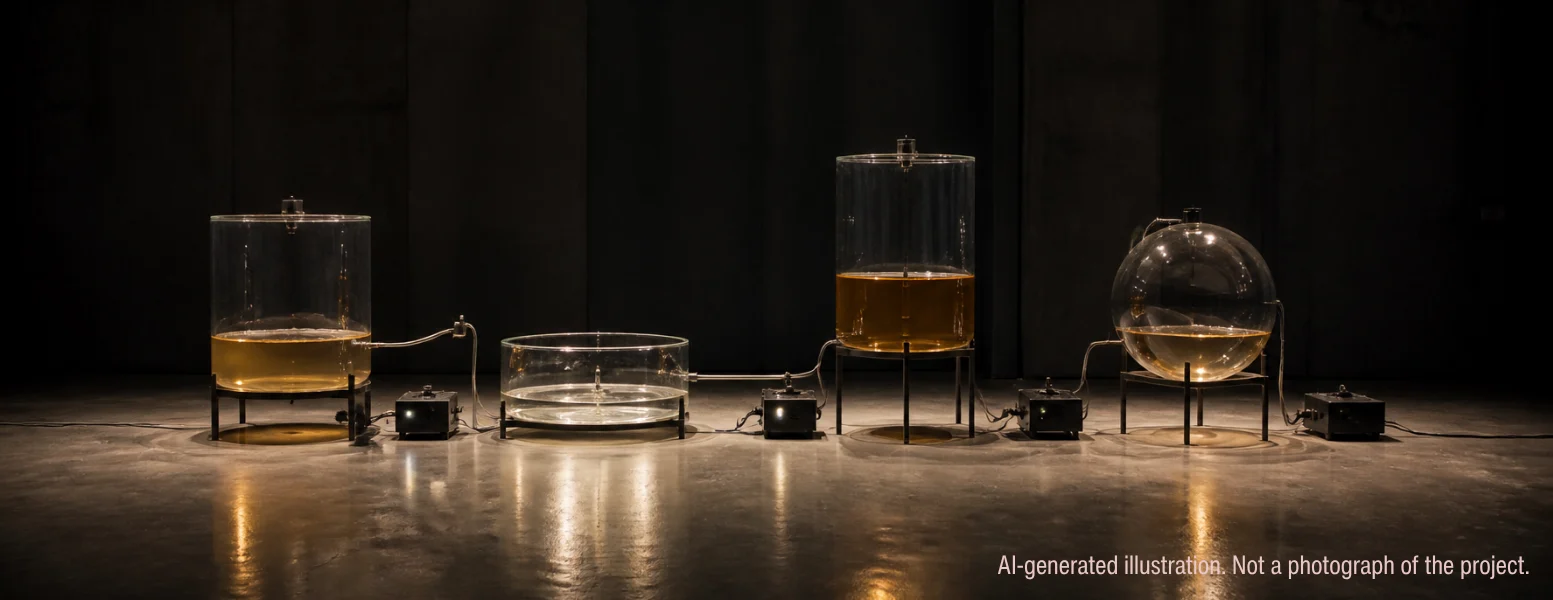
Invisible particle events become movement and light
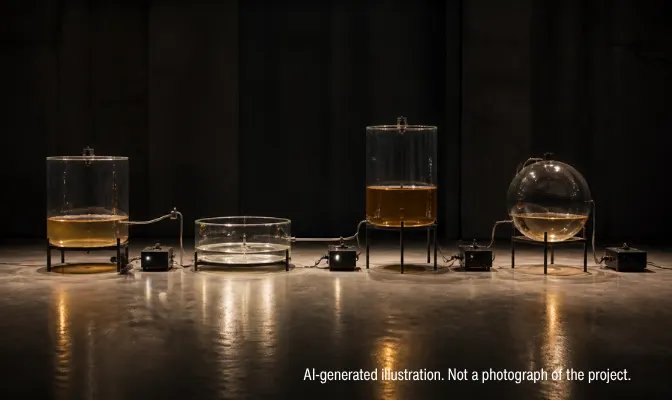
Yunchul Kim · Arts at CERN · FACT, Liverpool · Artwork 2018; Collide Award 2016
In dialogue with physicists at CERN, Yunchul Kim explored matter through sculptural experiments with fluids and responsive materials. A particle detector activates light and pumps, setting fluid in motion through the installation. The collaboration connects particle sensing, fluid control and sculptural form, making invisible physical events tangible through movement and light.
Quantum computing opens new ways to experience technology
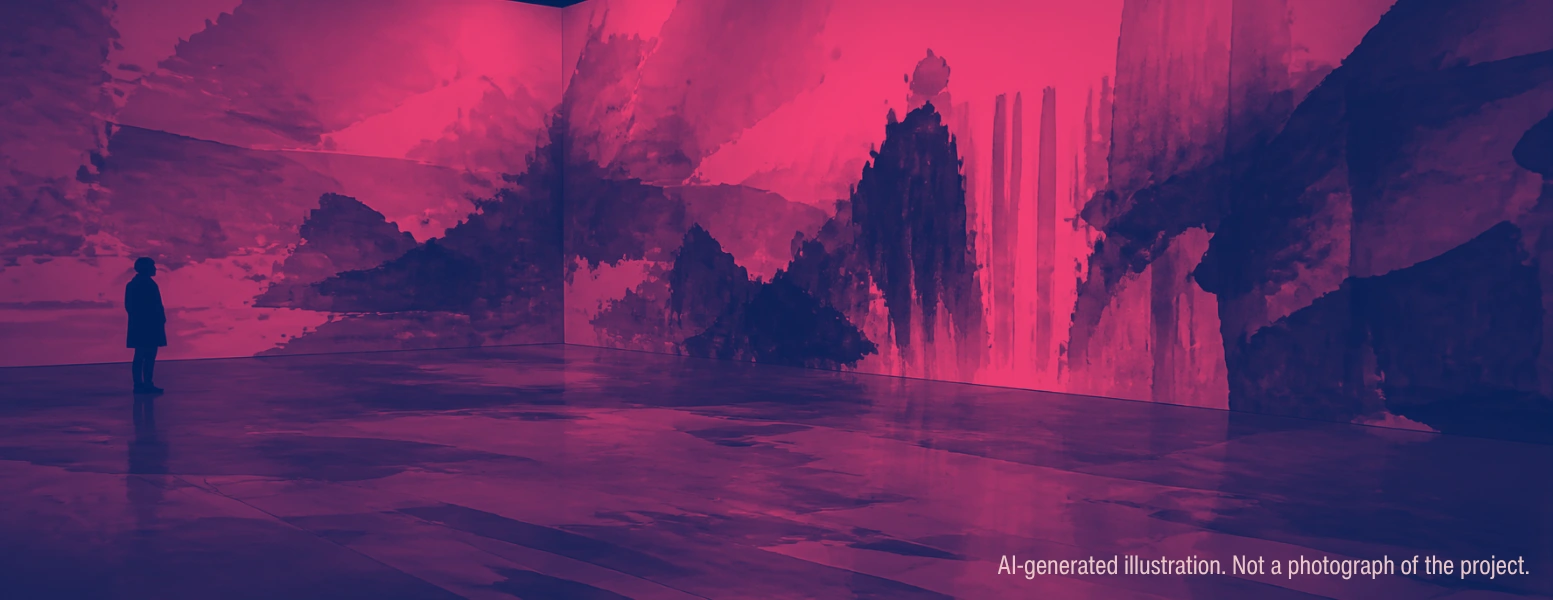
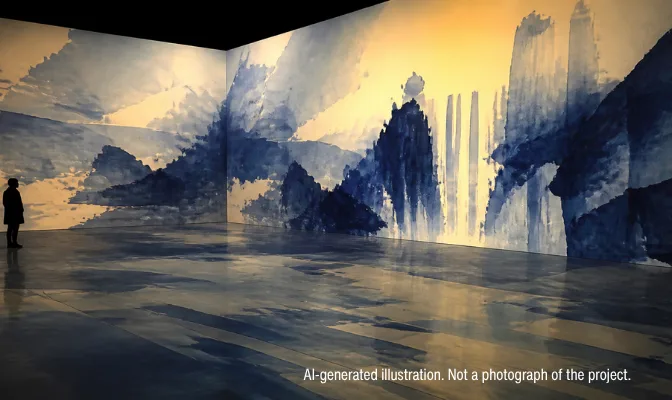
Libby Heaney · LAS Art Foundation · 2022
Artist and quantum physicist Libby Heaney wrote code for IBM quantum computers to transform her watercolours into animated worlds. The resulting installation surrounds visitors with moving images and sound. Using quantum computing as both a creative tool and a subject of inquiry, it invites audiences to explore how emerging technologies could reshape everyday life, privacy and power.
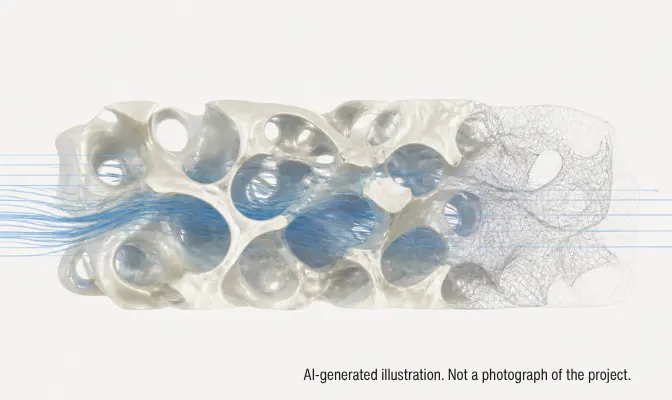
Artistic modelling advances the study of airflow in the lung
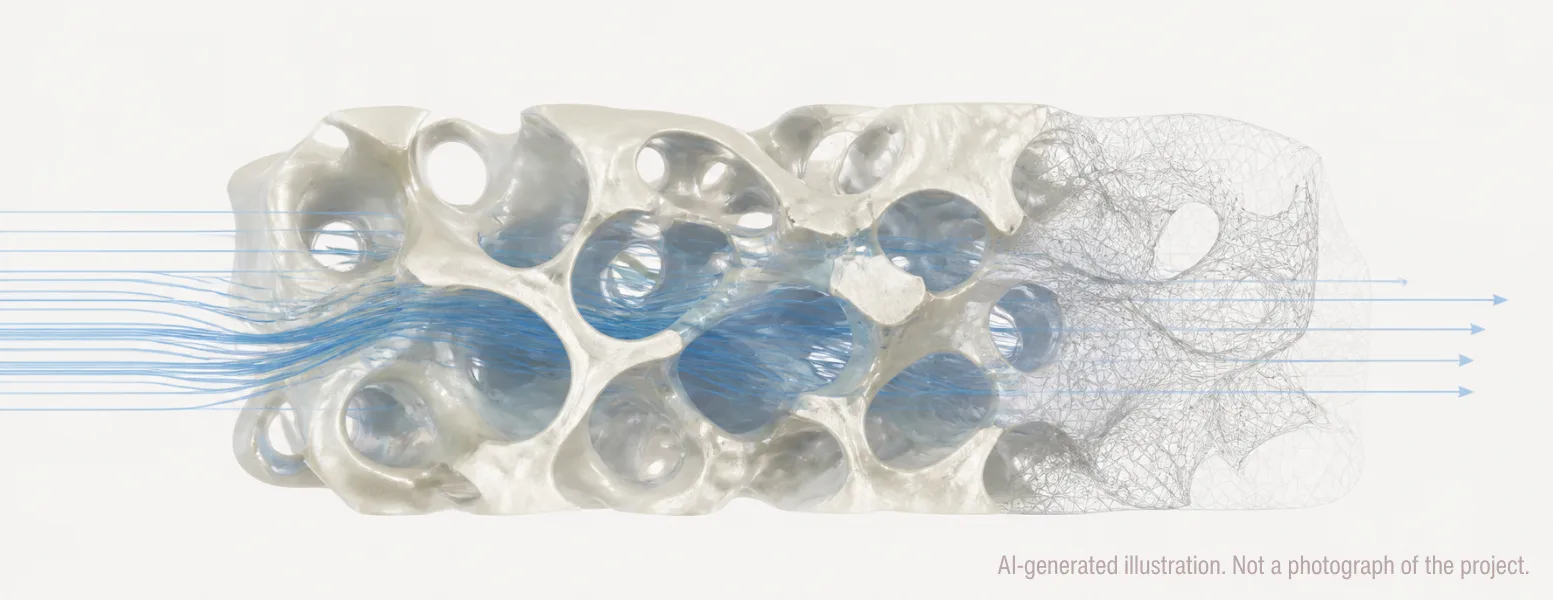
Filippo Nassetti · Barcelona Supercomputing Center · Residency 2023–2024
Filippo Nassetti worked with researchers to develop digital models of the lung’s microscopic air spaces, drawing on his methods for creating complex organic forms. These models support simulations of airflow and the deposition of inhaled particles. The collaboration produced a joint scientific paper and artworks that make respiratory structures and flows visible, connecting artistic modelling with tools for studying lung function.
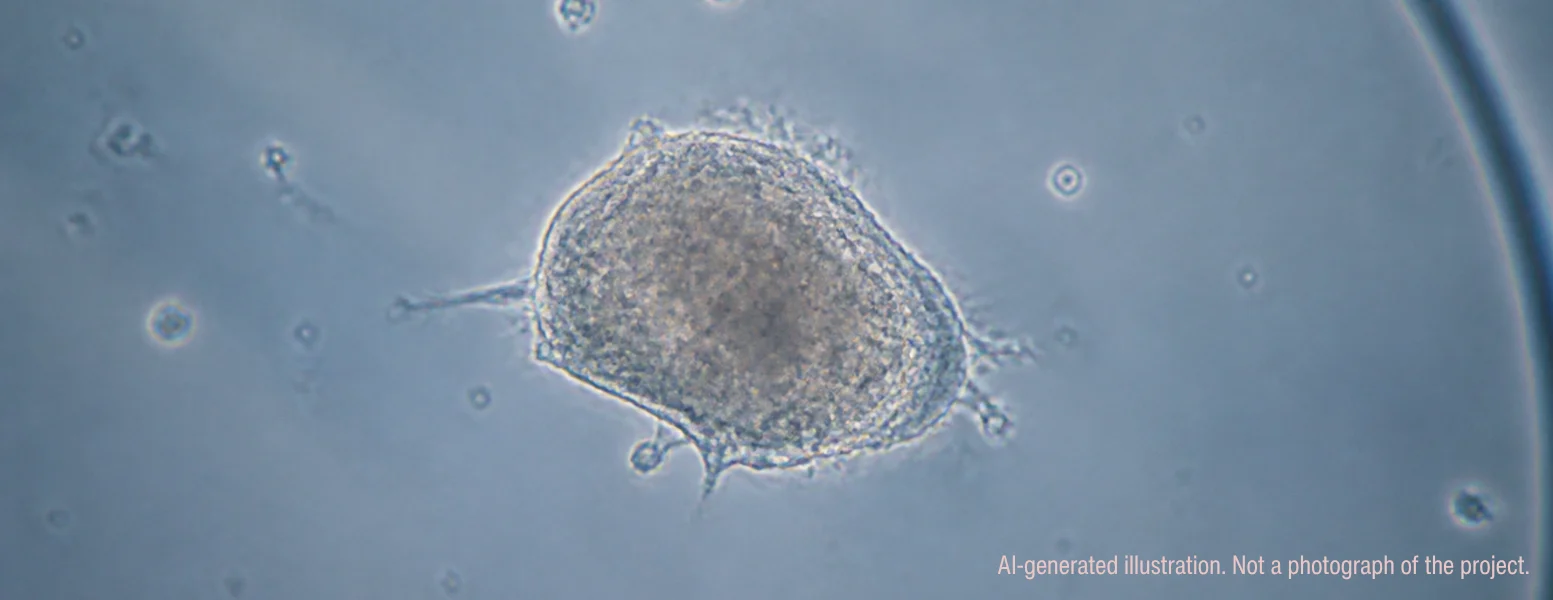
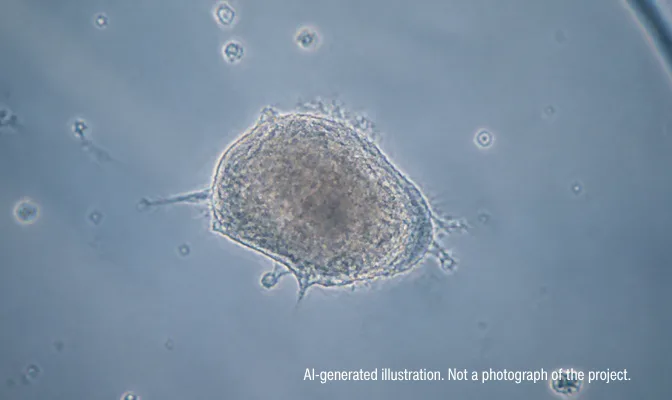
Shared inquiry explores intelligence in living tissues
Guillaume Slizewicz, Antye Guenther and Alice Jarry · GLUON · Laboratory of Bioengineering and Morphogenesis, KU Leuven, Belgium · 2025–2026
Guillaume Slizewicz, Antye Guenther and Alice Jarry work with Adrian Ranga and researchers at KU Leuven, a university in Belgium. They explore brain organoids: three-dimensional tissues grown from human stem cells that model aspects of brain biology. Laboratory encounters and shared prototyping connect artistic and scientific inquiry into intelligence, consciousness, the care of living tissues and possible futures of biological computing.
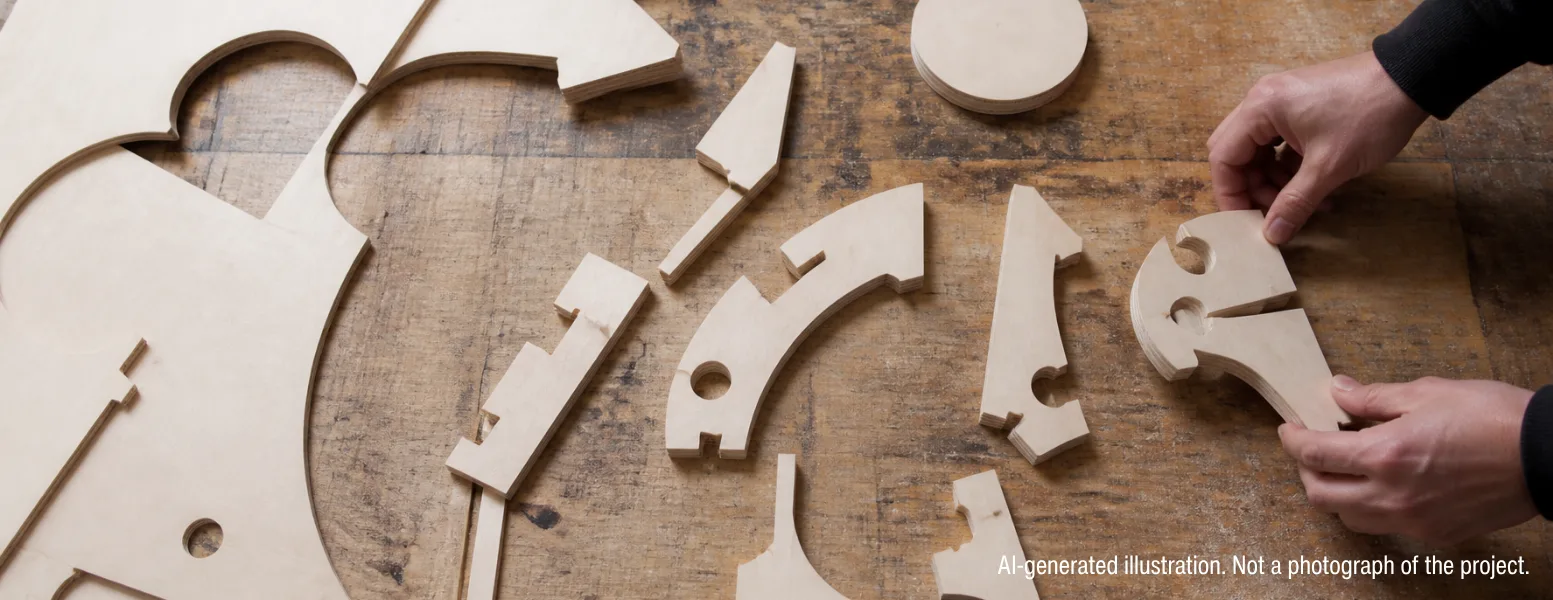
Software turns unused sheet space into new components
Jesse Howard · Fiction Factory · IAAC · Better Factory experiment; public presentations 2022–2023
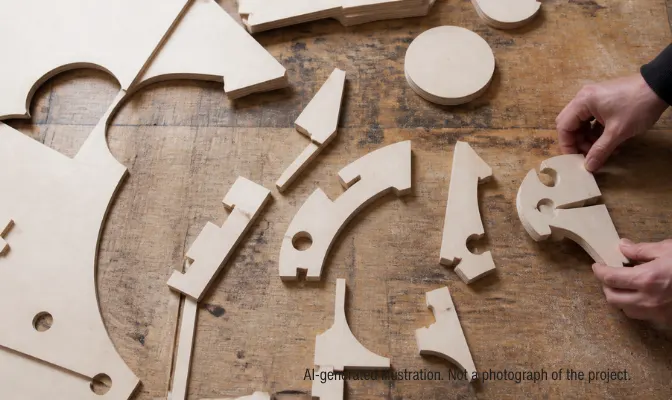
Jesse Howard, Fiction Factory and Institute for Advanced Architecture of Catalonia (IAAC) developed software that designs new components in unused spaces on a sheet before a computer-controlled router cuts it. This changes production planning so that material destined to become waste becomes useful parts. Outcomes include publicly available code, furniture and exhibition structures, with collaboration continuing beyond the initial Better Factory experiment.
Music opens new perspectives on medical imaging
Johanna Barnbeck and Thoralf Niendorf · Max Delbrück Center · 2026–2027
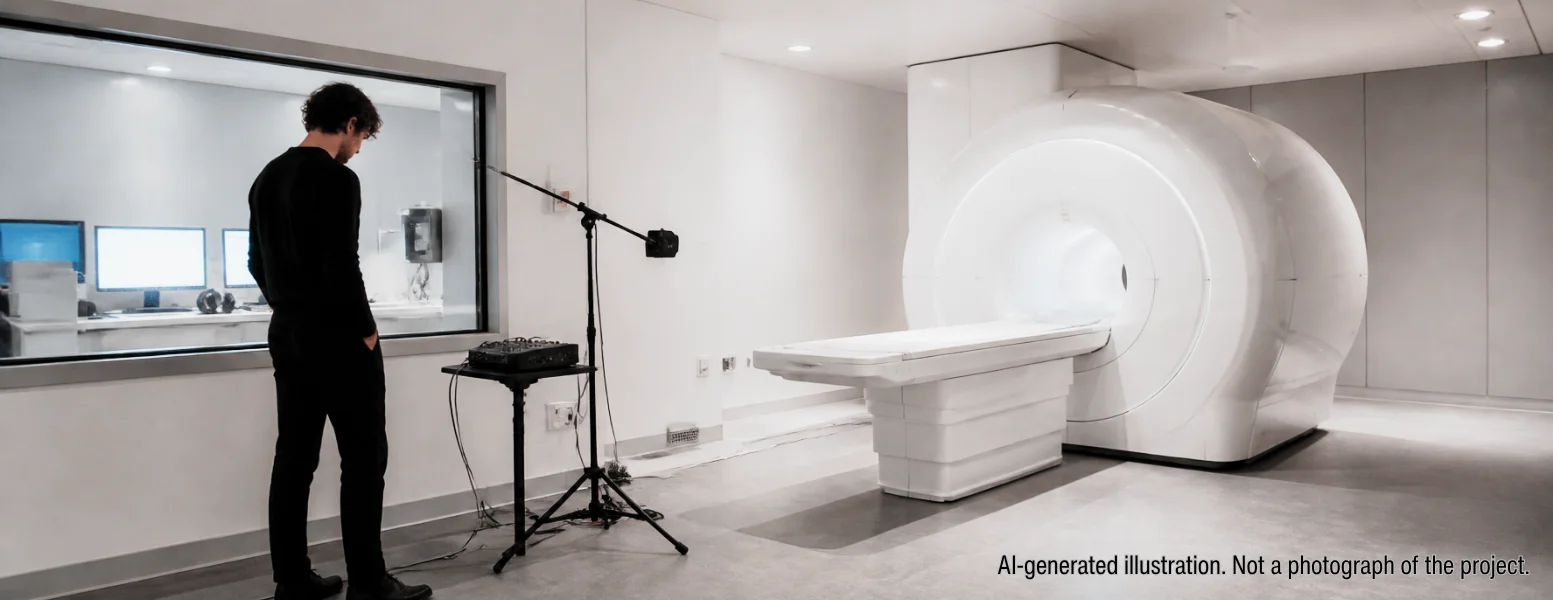
Johanna Barnbeck and Thoralf Niendorf are developing music and visuals from the sounds and images of magnetic resonance imaging, known as MRI. Planned workshops involve patients, healthcare professionals, researchers and artists. A freely accessible sound library, club night and multimedia exhibition are planned for 2027, aiming to make medical imaging more approachable and open new perspectives on scientific advances through everyday culture.
Connect with TAH Laboratory
We welcome foundations, individual donors and companies interested in supporting the first residencies.